Tuesday, June 28, 2016

Passport

I have learned something living in Australia (well I've probably learned lots of things, but I have learned this!). Australians love to travel. They travel far. And they travel for a long time. A one week holiday? There's no such thing. A two week holiday means a quick trip down to Margaret River. Try 4 weeks to Europe. Six months driving around Australia. A year in a camper van in the US. It's not surprising when you're in one of the most isolated cities in the world and the closest "Road trip" is over 2,600 kilometers to Adelaide.

Before moving around the world, I had very limited (I now know) international travel. I spent 4 months studying abroad in Ireland, during which I traveled around Ireland and a quick trip to London and Edinburgh. I'd been to Canada (does that really count as internationally?) But it was only a quick conference in Toronto and crossing the border to the other side of Niagra Falls. I've been to Texas, but never Mexico. I've been to Puerto Rico, no passport required.

 Since my move to Australia, I have added 4 continents to my travel, for a total of 6. 

Australia & New Zealand, Oceania 
(try telling a New Zealander they're on the continent of Australia)!

On a side note, when I was a kid we played this game called Passport, and I still remember the way the electronic lady said, "Ocean-YA"
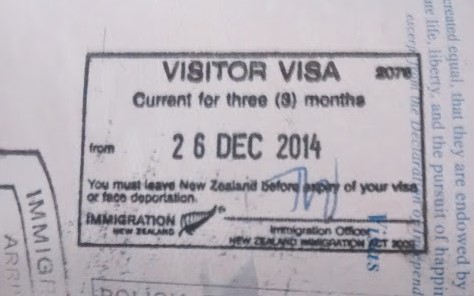
(it's hard to make out, but it's my first of a few entry stamps)


Brazil, South America 

South Africa, Africa

And my most recent trip to...
 
Thailand, Asia
(the Dubai airport doesn't count)

Yes, it was relaxing and lovely.


But there's one continent that will always be home...

I've been a lucky girl to have the opportunities to see some beautiful places. But the more places I go, the more places I want to go.

Antarctica, lucky number 7, here I come...!

Wednesday, June 15, 2016

Just Now, Now

As I was wandering around Cape Town, South Africa, a friend asked me, "Shouldn't you be taking pictures for your blog?" 

"I need to wait to be inspired by a theme. I've taken some beautiful pictures."

"Can't beautiful Cape Town be the theme?"

Well yes, yes I think it can.

There's a reason why Cape Town is one of the World's top destinations.

The center of Cape Town is Table Mountain


But the 12 Apostles are right behind.

To the morning Misty Cliffs...

And the Cape of Good Hope.

It was a perfect winter day for a walk.

The windy Chapman's Peak Drive was stunning in the "magic hour" light

And Hout Bay disappeared into the distance.

The wineries weren't too bad either... More pinotage please!

But in all this beauty, it's important not to forget that South Africa is still struggling for peace. The poverty and racial lines are still part of every day life, but Nobel Square is a reminder of the four Nobel peace prize winners from South Africa who have made a difference: Albert Luthuli, Desmond Tutu, FW de Klerk, and Nelson Mandela.

From the early morning view from the Rhodes Memorial, we couldn't hide from the #RhodesMustFall that started only a year ago.
But I can't wait to visit again and see the progress that's been made. Don't worry, change is coming just now, now.

Wednesday, June 1, 2016

Run for a Reason

Some of you who I met in South Carolina might have known that I caught a bit of a running bug. I'll admit it, I like to run. I always thought it was silly to run for no purpose, but there's something about a long, slow Saturday morning trail run that is my happy time. Thanks to my friend "crazy Katie" I've done some longer endurance challenges that prior to 2009 I would have thought to be ridiculous.

When I moved to Australia, I decided that I wasn't going to train for anything. Training for a marathon or a half-ironman takes a lot of time.


It's a lot of quiet Friday nights going to bed early and Saturday mornings are consumed. I didn't want to feel guilty about deciding to go to the pub on Friday night with some new Aussie mates, or leaving early Saturday morning for a weekend trek out to the bush. So I ran when I had time and when I wanted to.

I finally decided that I was going to see how an Australian race compared. August 2015 I was going to run a full marathon. I started getting back into my training regime in April. I remember my 14 mile run in the rain before a Dockers Saturday night footy match. I ran through Subiaco, Kings Park, onto the campus of University of Western Australia and back to the city via the foreshore. I was splashing through puddles and felt good. Countless weeks of not running, three physios, a torn meniscus & cyclops lesion, a knee surgery later, and almost two years later I had still yet to run in an Australian road race. (I may have walked 100 km, but that's different)

I knew it was going to be ugly. I knew it would be my slowest half marathon race yet. But I knew I had to do it and get it out of the way. My training was sparse (I still have some sightseeing to do! Plus I'm missing part of my meniscus (think cushion between your bones), so I tried to take it easy.

The race of choice? One of Perth's biggest, HBF Run for a Reason. 30,000 participants taking on the 4 km, 12 km, or half marathon. And I can walk to the start and finish lines. Not to mention my dearest friend (not a runner) was in town, so I signed her up for the 4 km too, and everyone else I know.

I pinned my race bib on before dawn and thought. "This is the least prepared I've been for a race."


And how does an Australian race compare?

Well, the course music was a little different. I think I hear a cold chisel song. But I also heard Sweet Home Alabama running through the freeway tunnel. It's the same as any other race I've done. It was a beautiful, and relatively flat course, with no race clocks. I didn't wear a watch so I had no idea of my pace. After a bout of flu two weeks prior (no, not the man flu, the real flu), I ditched any goals I had and just ran my "happy pace". But I was happy when I crossed the finish line. And as we were corralled from the finish line, some 70 year old man told me "You're a great runner". I wanted to say "oh, this is the worst race I've ran" or "I'm usually a lot faster". But my laid back Aussie attitude was content with finishing, pleasantly surprised by my time, and just happy to be running again.

Happy trails everyone. Whether you're running, walking, or cheering on a friend. Be thankful.

Some proof that I actually did run and finish.


Friday, May 13, 2016

This is Australia

In case you're keeping track, I've been to the 6 Australian states: New South Wales, Queensland, South Australia, Tasmania, Victoria, and of course Western Australia. I've also been to the Australian Capital Territory. It was time to tick the last state/territory, the Northern Territory, off my list and head in to the centre, literally.
Flying from Western Austrlia to Alice Springs, you cross some of the barest outback. THere aren't even roads for awhile. Then just a few scattered mines with dirt roads.

Alice Springs in the "center" of the centre, almost halfway between Adelaide and Darwin. 


Alice Springs itself isn't much to write home about, but it's surrounded by beautiful ranges.


Before I moved to Australia I read a few novels about the Lucky Coutnry, including Bill Bryson's "In A Sunburned Country" (titled"Down Under" in oz). And I still remember him describing his brief trip to see Uluru.

"So you are aware, as you drive to the park entrance and pay the ambitiously pitched admission fee of $15 a head and follow the approach road around, that you have driven 1,300 miles to look at a large, inert, loaf-shaped object that you have seen photographically portrayed a thousand times already. In consequence, your mood as you approach this famous monolith is restrained, unexpectant - pessimistic even. 

And then you see it, and you are instantly transfixed...

I have discussed this since with many other people, nearly all of whom agreed that they approached Uluru with a kind of fatigue, and were left agog in a way they could not explain. It's not that Uluru is bigger than you had supposed or more perfectly formed or in any way different from the impression you had created in your mind, but the very opposite. It is exactly what you expected it to be."

I agree.

We spent a lot of time and lost some sleep to see the magical Uluru sunset and sunrise. This is what it's supposed to look like.
A magic thing happens in the magic hour: the rock turns a bright red.

The magic doesn't happen when it's completely cloudy

But it was still pretty special.

When I told people I was going to Uluru, they asked if I was going to climb it. I figured there was some company charging $$$ to put you in a harness and let you climb up the rock face. I was wrong. This is what "the climb" looks like. It's a chain going up the side of a rock. 

When it's open, anyone can climb. Granted it's only open 50-60 days a year. They'll close it for the following reasons.


Heat - closed at 8:00am if the forecast maximum temperature for Yulara is 36 degrees centigrade or more;

Wind - closed if the estimated wind speed at 2500ft is 25 knots or more;
Storms - closed if there is any storm activity between NW and SW closer than 50km to Uluru;
Rain - closed if there is a greater than 20% chance of rain in the next 3 hours;
Lightning - closed if there is a greater than 5% chance of thunderstorms in the next 3 hours;
Cloud - closed if cloud descends to or below the summit of Uluru;
Darkness - closed from half an hour after sunset to half an hour before sunrise;
Rescue - closed during all rescue operations on Uluru.
Cultural Reasons - closed upon request from Traditional Owners following a death or due to a cultural event or ceremony occurring.


No extra cost. No guide. No safety equipment. 37 people have died climbing Uluru. But it's much more than a safety issue.

Like most of White Man history, the European explorers came upon Uluru, named it Ayer's Rock and "owned" it. Uluru is a very spiritual place The land was returned to the traditional Aboriginal land owners in 1985, but the government made a stipulation. They owned the lease to the national park for 99 years. And as part of that lease, they stipulated that the climb would remain open. They thought that's what brought people to Uluru. They would only close it if less than 20% of visitors coming to Uluru chose to climb it. Last year, 27% climbed it. Despite the safety concerns. Despite the cultural disregard (imagine people coming to climb the Vatican). And despite being asked not to.

It just doesn't make sense to me how it's still open for both the safety and cultural reasons. Is a selfie at the top worth a chance of death and disrespecting perhaps the world oldest race? 

No I didn't climb it. And I wouldn't have even if the climb was open.

We also got to see Uluru's big (or little) sister, Kata Tjuta. Just as imposing across the flat outback.


And another large monolith in the middle of the flat, Mt Connor aka Foolaru.


And we attempted another cloudy sunrise at Kings Canyon


But it wasn't until the sun was up that we could see our spectacular surroundings.


Can you spot the floating kangroo in the water? It was a bit too high of a diving board into the gorge.

And it wouldn't be a trip to the outback without dingo spotting. We also heard them howling over the campfire.


It was a quintessential Australian experience complete with cooking damper over the fire, sleeping in a swag, and stopping by the shade of a coolibah tree.

Monday, April 25, 2016

Lest We Forget

This morning was a holiday, a three day weekend, a day off from work.
This morning I was up before dawn.
This morning I ran up to Kings Park, in the dark, rain threatening.
This morning I wasn't alone.
This morning I joined 40,000 other Western Australians up before dawn.
This morning I joined 40,000 standing in silence to remember.
This morning I joined in just one of the many  ANZAC dawn services around the country and around the world.
It's a strange feeling being surrounded by so many people and hearing almost silence. It was not somber, it was respectful. From very young children to aging veterans who have a bit more to remember.


The legend of Anzac was born on 25 April 1915, and was reaffirmed in eight months' fighting on Gallipoli. Although there was no military victory, the Australians displayed great courage, endurance, initiative, discipline, and mateship. Such qualities came to be seen as the Anzac spirit.
"The Gallipoli campaign was the beginning of true Australian nationhood. When Australia went to war in 1914, many white Australians believed that their Commonwealth had no history, that it was not yet a true nation, that its most glorious days still lay ahead of it. In this sense the Gallipoli campaign was a defining moment for Australia as a new nation, but also a key moment in the evolution of a particular image of Australian masculinity.
The major features of an ANZAC legend were discernible very early in the campaign: Australians were bold and ferocious in battle but were unwilling to bow to military discipline. An ANZAC never flinched - if he died it was with a joke, or a wry smile on his face - yet nor would he salute a superior officer....In the ANZAC legend, the Australian Imperial Force was a democratic organisation, in which there were friendly relations between officers and men, and anyone could rise from the ranks to a commission."


-Dr Frank Bongiorno, Senior Lecturer in History at the University of New England

As the morning light broke over the hills, the dignitaries lay their traditional ANZAC wreaths to a bagpiper's lament.


They went with songs to the battle, they were young, 

Straight of limb, true of eyes, steady and aglow, 
They were staunch to the end against odds uncounted, 
They fell with their faces to the foe.

They shall grow not old, as we that are left grow old: 
Age shall not weary them, nor the years condemn 
At the going down of the sun and in the morning 
We will remember them.

Lest we forget.